

CX Has Moved from Service Metric to Logistics Strategy
For years, logistics excellence meant cost control, network efficiency, and delivery SLAs. That has changed. Gartner shows nearly 40% of logistics leaders now prioritize CX through expanded service options, ahead of cost reduction and those who delay risk losing up to 20% of repeat customers. CX is no longer owned by service teams. It is shaped by how fulfillment models, systems, data, and workflows work together.
The question is no longer: “How is our customer support?”
It is: “Is our logistics operating model built to deliver experience at scale?”

What CX Breakdown Actually Looks Like in Logistics Operations
You don’t see CX issues in surveys first, you see them inside operations like:
- Customer issues showing up as frequent exceptions, constant workarounds, and ongoing firefighting across teams
- 3PL performance measured on SLAs, not CSAT or NPS
- Teams spending hours responding to status queries instead of enabling customers
- Onboarding cycles stretching because data and workflows don’t align
- Different teams operating on different views of the customer journey
This is where CX quietly erodes growth, margins, and loyalty.
Designing CX Around How It Works
Improving CX in logistics is not about touchpoints, it is about handoffs, data visibility, and workflow design. This is where Bridgenext focuses:
-
We identify exactly where customers are forced to follow up, repeat themselves, or escalate.
-
Align CX initiatives with measurable business outcomes through practical roadmaps.
-
Create a transparent, smooth client onboarding journey from first engagement to go-live.
-
Replace manual, email-driven coordination with integrated workflows that reduce handoffs and status chasing.
-
Unify data, teams, and interactions to deliver consistent CX across channels.


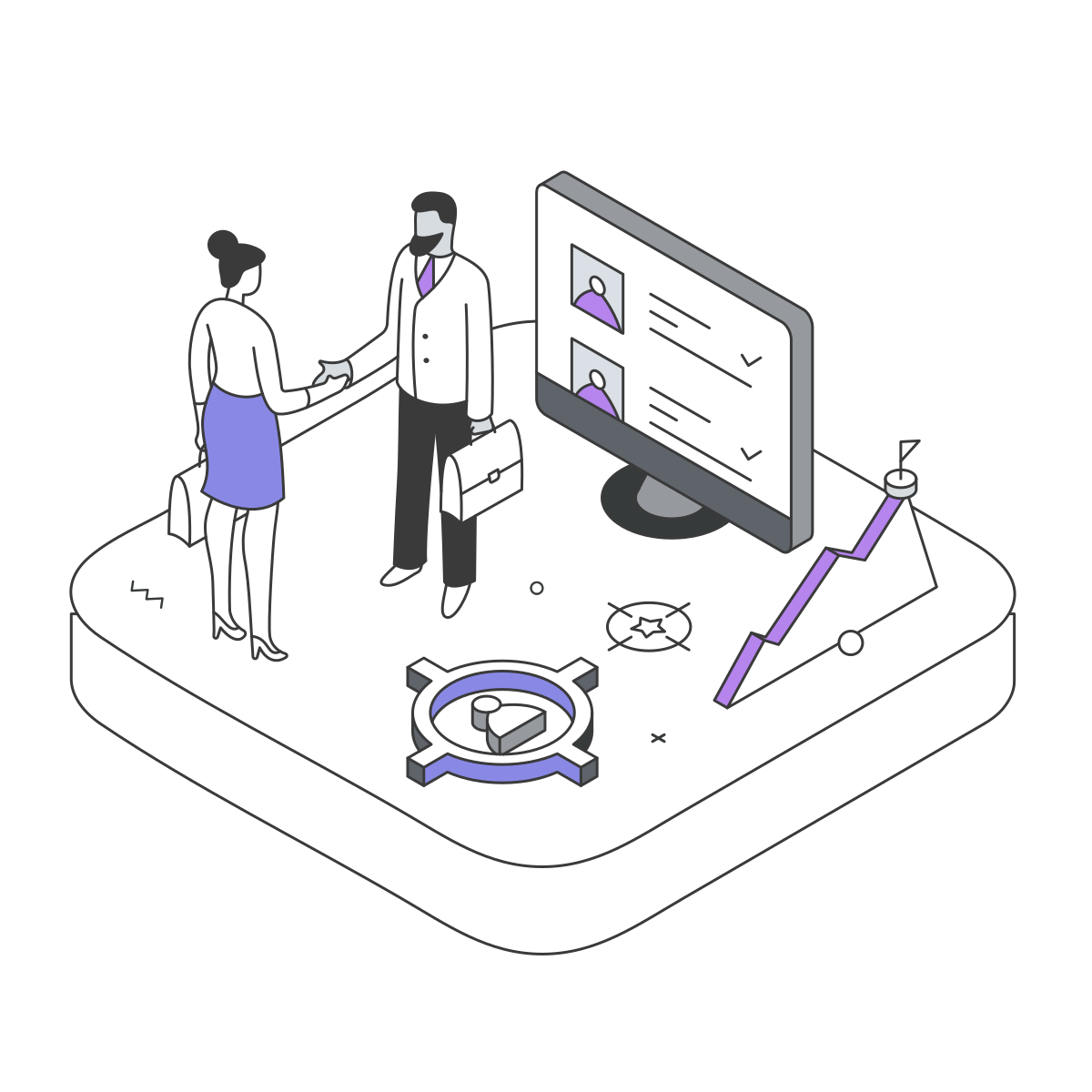


Bridgenext: Enabling Practical CX Transformation
Designing better CX is only half the work. The real shift happens when CX becomes measurable, owned, and tracked across the organization.
Bridgenext helps T&L leaders embed CX into performance, planning, and governance.
- Bringing CSAT and NPS into fulfillment and 3PL performance reviews
- Using CX data to shape priorities and investment decisions
- Establishing ownership and analytics practices that keep CX visible across teams
This ensures CX is not a one-time initiative, but an ongoing performance standard across the logistics function.
Translate CX Intent into Operational Impact.
If your customers are waiting for clarity or your teams are answering the same questions repeatedly, now is the time to simplify and strengthen your CX framework.
Identify where CX is shaped inside your logistics operations and where targeted changes can create measurable impact.
Start the conversation today.