10.20.25 By Bridgenext Think Tank
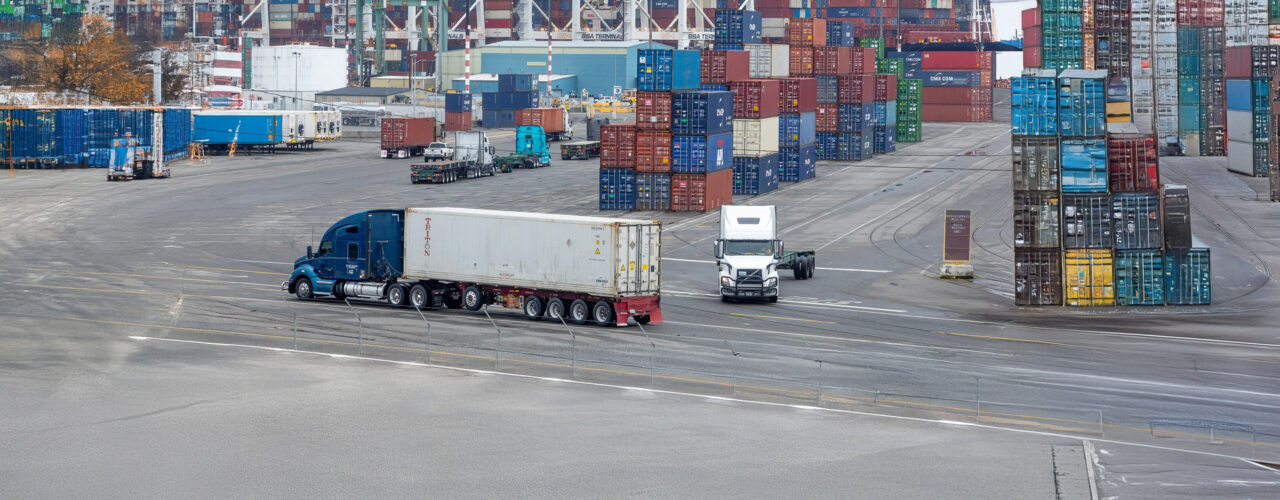
Freight costs fluctuate by up to 20% month-to-month. Factors like fuel prices, shifting trade routes, labor shortages, and climate disruptions can render yesterday’s rates quickly obsolete. This is the reality for every operational leader in the logistics sector.
Transportation and logistics leaders recognize that static rate models cannot keep pace with this volatility. Quarterly pricing reviews fail to account for daily fuel surcharges, real-time capacity shifts, or regulatory adjustments. Reliance on outdated averages and manual data entry leads to missed opportunities during peak demand and eroded profit margins in softer markets. The financial repercussions are significant: suboptimal can result in millions of dollars lost each quarter.
This blog explores why Dynamic Freight Pricing (DFP) is essential, detailing its measurable impact across the freight network and how it can be integrated into existing logistics systems with minimal disruption.
The freight market has always been cyclical, but the current environment is more volatile, complex, and interconnected than ever before. Pricing strategies built for stable markets can’t keep up with today’s rate swings and operational constraints.
Static pricing models simply can’t react fast enough. They often lead to two outcomes, missed loads in tight markets or reduced margins in soft markets.
Dynamic Freight Pricing addresses this by combining real-time rate intelligence, carrier availability, and operational data into a single decision framework. Instead of guessing or relying on outdated averages, logistics teams can dynamically adjust freight quotes, ensuring competitiveness while protecting profitability.
Dynamic Freight Pricing delivers measurable business across the supply chain network from shippers, to brokers, and carriers alike.
Shippers that adopt DFP gain a stronger handle on costs and reliability.
DFP enables shippers to move from reactive tendering to proactive cost management, allowing them to plan and allocate freight more intelligently.
For intermediaries, margins depend on how quickly and accurately rates are adjusted to market movement.
By integrating DFP into their systems, 3PLs can accelerate decision-making, strengthen trust with carriers, and reduce manual negotiation cycles.
Carriers already work in narrow operating margins. DFP provides a framework for better route planning and utilization.
With DFP, carriers see fewer rejected tenders and more predictable earnings — two outcomes that directly improve long-term sustainability.
Successful integration of DFP depends on having the right digital foundation.
API Connectivity Is Now the Standard
Dynamic pricing depends on real-time, two-way data exchange. APIs have largely replaced legacy EDI connections, enabling transportation management systems (TMS) and enterprise resource planning (ERP) platforms to access up-to-date rate data from sources like DAT, Truckstop, and internal cost models. This connectivity supports instant rate updates and automated load matching, cutting down on manual quote revisions and improving response time.
From TMS Integration to a Unified Data Ecosystem
Many logistics organizations start by integrating DFP into their TMS. The next step is to build a unified data ecosystem that combines freight, operational, and external data. Platforms such as Databricks or Snowflake enable this through a data lakehouse approach, consolidating multiple data streams for analysis. This unified dataset supports AI and ML based pricing models that can predict cost changes, identify the best time to book freight, and continuously refine pricing accuracy.
Build vs. Buy: Making the Right Decision
Your decision should be based on data maturity, operational complexity, and long-term scalability.
As Data analytics and AI systems matures, DFP systems are shifting from reactive pricing toward predictive and autonomous decision-making.
Here’s where the industry is heading:
These capabilities will enable logistics organizations to make faster, smarter decisions and scale efficiently in any market condition.
For logistics leaders planning their next step toward intelligent automation and AI integration, read Top 10 Questions Logistics Leaders Ask About AI and Automation. It expands on how automation strategies complement Dynamic Freight Pricing to drive resilience and profitability.
Market volatility has become the operating norm. Dynamic Freight Pricing allows logistics leaders to stay profitable in this environment by making pricing adaptive, data-driven, and transparent.
For shippers, it means cost predictability. For brokers, it means faster and fairer deal-making. For carriers, it means stability and utilization. The real risk is waiting too long to modernize while your competitors use data and automation to outpace you.
Bridgenext helps logistics teams design and deploy scalable DFP solutions that fit your systems, data architecture, and business goals. Looking to elevate your operational resilience with Dynamic Freight Pricing? Contact us to get started.