07.09.25 By Doug Dimon

US CX scores just hit their lowest point on record, falling for a third straight year, according to Forrester’s 2024 Index. Yet 80% of executives still insist they deliver a “superior” experience—even though only 8% of customers agree, Bain’s classic “delivery gap” reminds us. The cost of this blind spot is brutal: one bad interaction drives 1 in 3 consumers away, and two or three slip-ups push 92% to abandon a brand altogether.
CX isn’t a side project; it’s the operating system of modern business. In this blog, we’ll show the lenses that can turn culture and teams into engines of loyalty and growth, and where brands routinely stumble so you don’t.
Forrester’s 2024 CX Index reveals that CX quality in the U.S. has declined for the third consecutive year, reaching an all-time low. Notably, only 3% of companies are considered customer-obsessed, yet these organizations report 41% faster revenue growth and 51% better customer retention compared to their peers.
This decline isn’t due to a lack of investment in digital transformation. Many companies have poured resources into new technologies, but without aligning these initiatives with customer needs, the expected value remains unrealized. The disconnect between digital advancements and customer expectations leads to frustration and churn.
In an era where customers have more choices than ever, delivering a seamless, emotionally resonant experience across all touchpoints is paramount. Failing to do so not only erodes customer loyalty but also undermines the substantial investments made in digital transformation.
Avoid the common traps—like disconnected goals and fragmented journeys—that keep your CX strategy from truly resonating with customers.
Many companies invest heavily in digital transformation—87% identify it as a priority—but only 40% see meaningful business outcomes, because initiatives aren’t tied to strategic goals like retention, CLV, or market share.
Brands often obsess over perfecting individual interactions, like mobile checkout or in-store service, without mapping full customer journeys. McKinsey warns that this siloed focus prevents companies from addressing root causes, leaving most CX improvements “incremental”.
In the U.S., fragmented CX drives avoidable churn, costing businesses an estimated $35 billion annually. Meanwhile, companies that fail to align CX with broader goals often underperform across key outcomes like loyalty, revenue, and customer acquisition.
Avoiding these mistakes means connecting CX efforts to clear metrics, mapping the full end-to-end experience, and ensuring that every touchpoint contributes meaningfully to strategic outcomes.
Embedding a customer-focused culture alongside strong, outcome-driven team structures transforms CX strategies into scalable, measurable business results.
Companies like Zendesk have found that unifying CX, employee, and product experiences boosts satisfaction by around 25%. This ensures that every team member—from product development to customer support—can tap into the same customer insights, delivering a unified brand experience.
Studies from Harvard Business Review reveal that emotionally engaged customers are 52% more valuable than those who are simply satisfied. Organizations build this by intentionally designing moments that evoke trust, surprise, and delight at crucial touchpoints—turning users into advocates.
Using AI and cloud-native platforms, companies are transforming CX into a continuous, personalized service, anticipating needs and adapting in real-time. This isn’t just efficiency; it’s about creating seamless, contextualized interactions across channels.
Following guidance from PwC and Gartner, brands integrate external partners and platforms—payments, logistics, content—to orchestrate a unified journey without building every component internally.
All these strategies need a guiding metric—one core indicator that aligns the organization. It’s critical to define your North Star to help your team stay focused, connect their efforts to business impact, and ensure they’re not just operating, but evolving toward value.
Here’s how to operationalize the four CX pillars with clear, measurable steps:
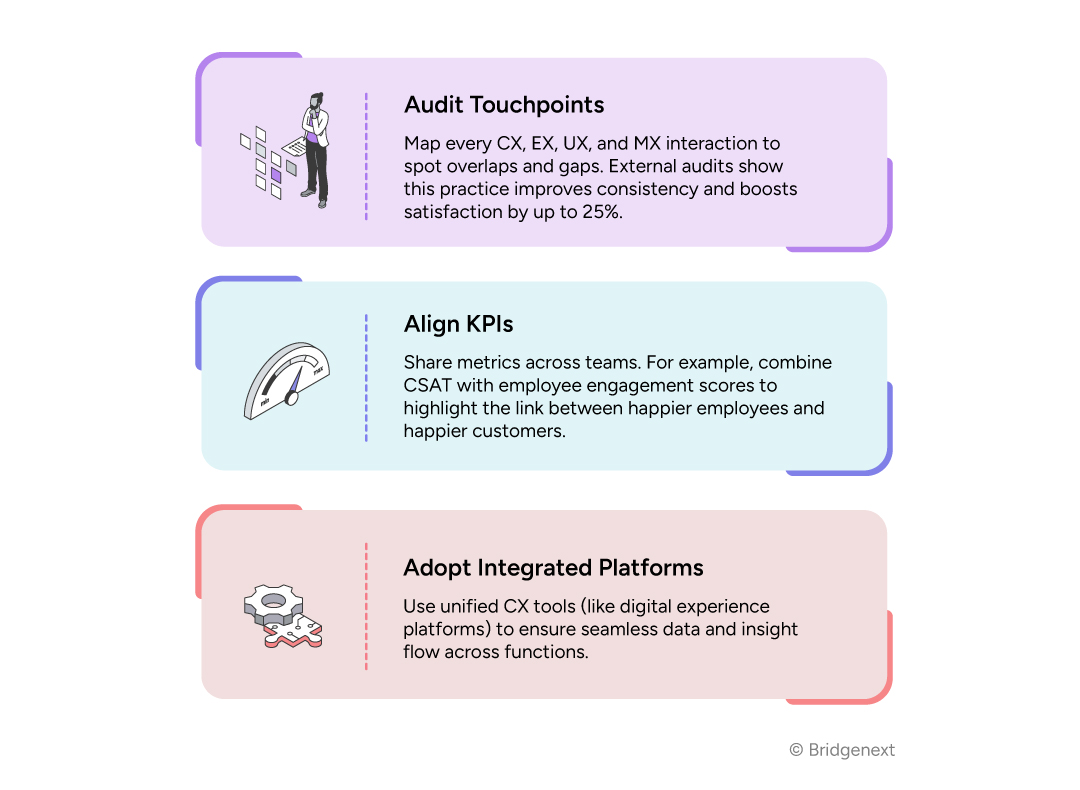
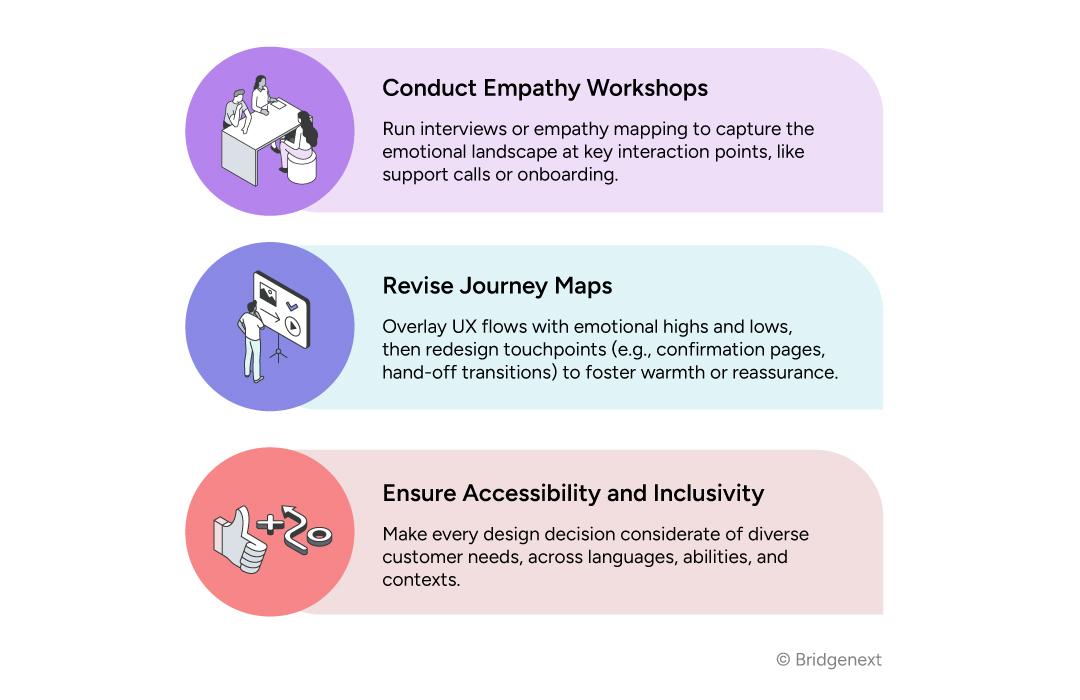
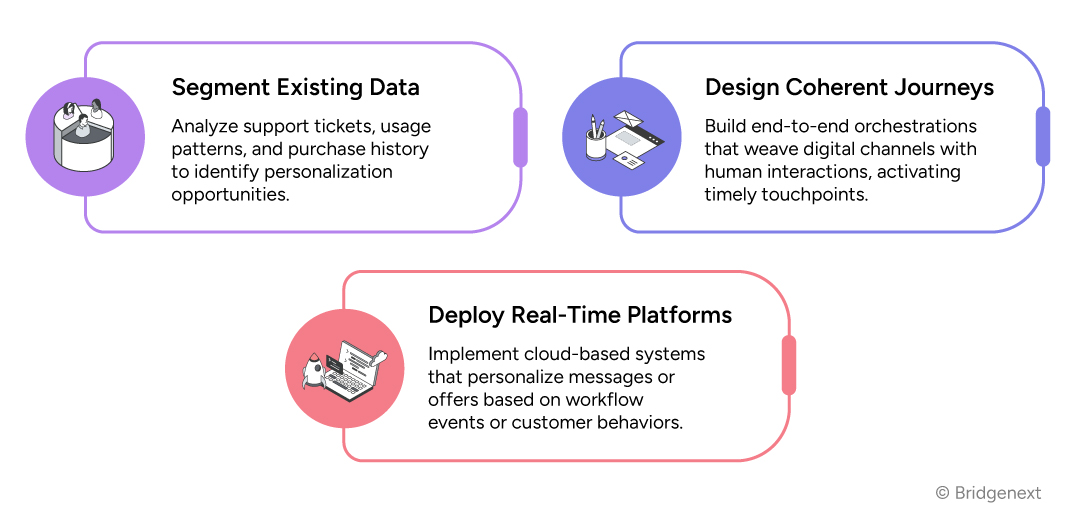
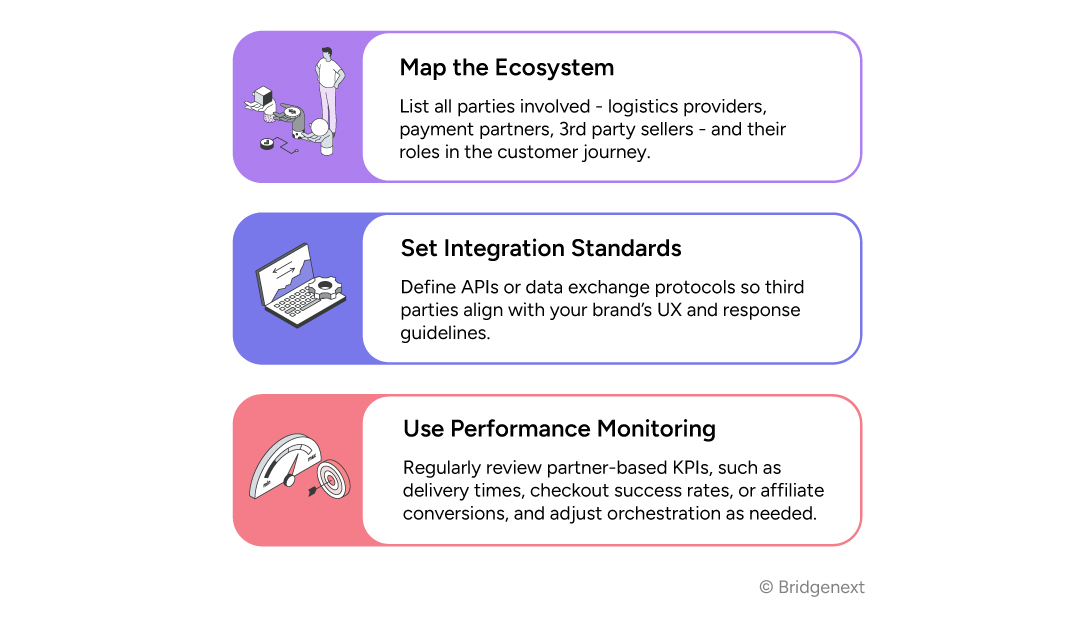
By following these practical steps, you can turn each CX pillar from concept into business muscle—creating loyalty, reducing churn, and building resilient, customer-first growth systems.
When organizations define clear CX metrics—such as retention rates, repeat purchase percentages, or self-service success—and link them to revenue and loyalty, they transform CX from an abstract initiative into a measurable growth lever. Customers spend 140% more with brands delivering consistently strong CX, making these metrics crucial for executive buy-in and funding. Equally important is dismantling organizational silos by establishing cross-functional and partner-inclusive teams that jointly own and manage complete customer journeys.
McKinsey finds that locking in “journey owners” and adopting an experience-supply-chain mindset delivers significantly better end-to-end outcomes than traditional segmented approaches. Together, aligning your CX KPIs with business outcomes and orchestrating cohesive experiences across internal functions and partnerships creates a powerful engine for sustained growth, customer loyalty, and competitive differentiation.
At Bridgenext, partnering with us means having a friendly CX co-pilot—right beside you on the journey. With a proven track record in applying empathetic design, continuous delivery models, and ecosystem orchestration, we help you embed customer experience strategies into your everyday operations. Contact us and let’s turn your CX ambitions into lasting customer lifetime and business value.
References
1. www.cmswire.com/customer-experience/the-worst-cx-ever/
2. www.forrester.com/press-newsroom/forrester-2024-us-customer-experience-index/
3. www.pwc.com/us/en/services/consulting/business-transformation/future-customer-experience-is-supply-chain.html
4. media.bain.com/bainweb/PDFs/cms/hotTopics/closingdeliverygap.pdf
5. www.mckinsey.com/capabilities/growth-marketing-and-sales/our-insights/how-the-operating-model-can-unlock-the-full-power-of-customer-experience
6. www.gartner.com/en/webinar/445952/1051272
7. www.ey.com/en_us/coo/customer-experience-supply-chain-management?utm_source=chatgpt.com